
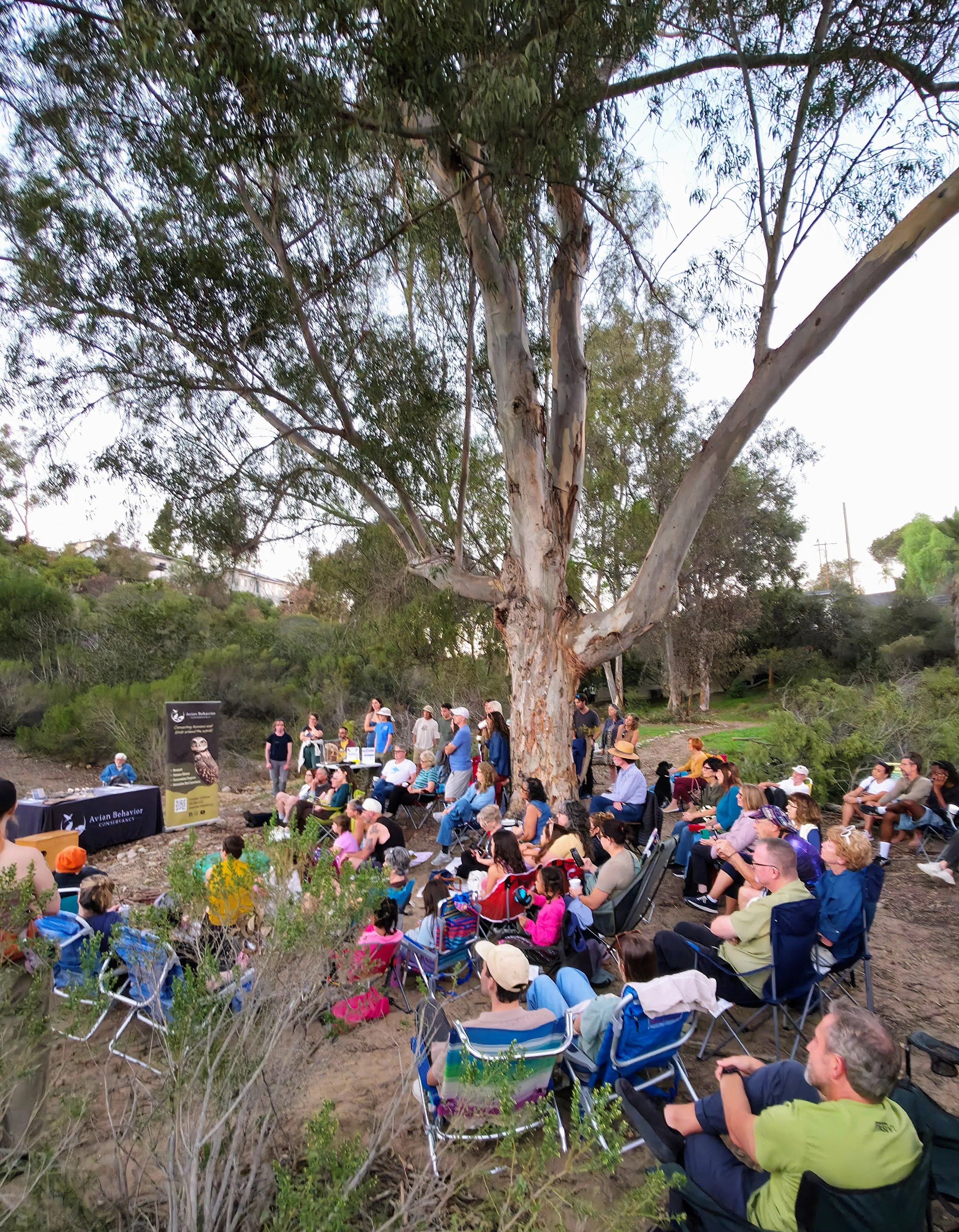
There is something truly magical about a warm evening in Golden Hill’s 32nd Street Canyon, especially when neighbors pull up lawn chairs under the canopy of a huge eucalyptus tree to learn about the wild creatures sharing our backyard. Bringing together world-class scientists, passionate locals, a renowned raptor expert, and a living apex predator made for an unforgettable community gathering. Between the warm breeze, the twilight glow, and a crowd buzzing with curiosity, the night reminded us exactly why we love showing up for this special urban oasis.
Up Close with Aldo and the Experts
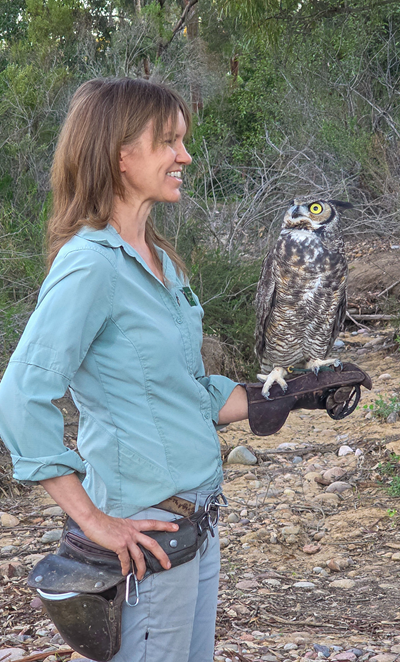
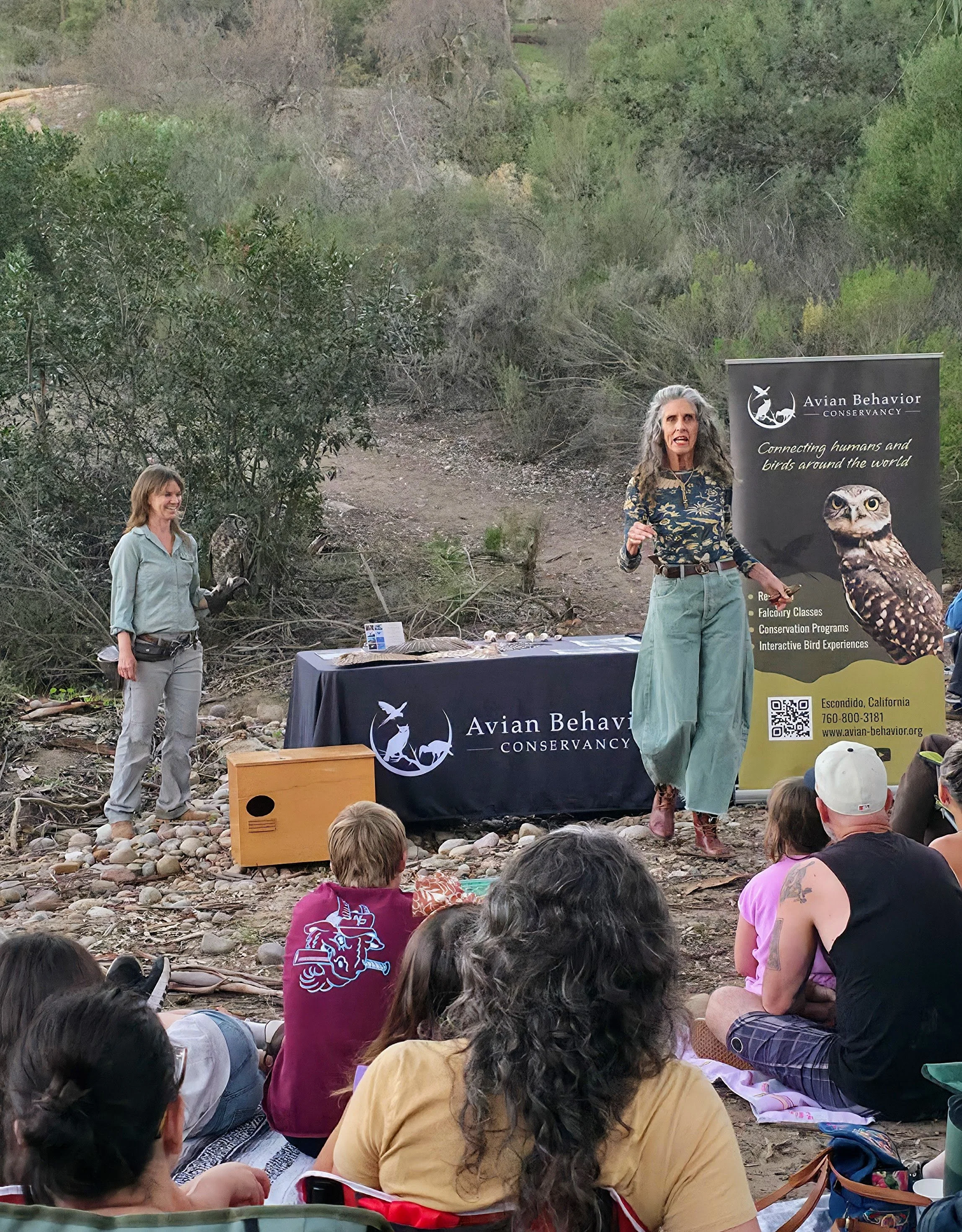
The absolute star of the evening was Aldo, a magnificent Great Horned Owl brought to the canyon by Hillary Hankey and her assistant Rain Carman from the Avian Behavior Conservancy. Hillary’s talk was full of energy and fascinating insights into owl behavior, and the excitement in the crowd was contagious. It wasn't just the kids leaning forward in their chairs—even the adults were thrilled to get this close to such an incredible nocturnal hunter.
Adding to the hands-on fun, the San Diego Natural History Museum’s conservation biology team brought the science right to the trailhead. Kayla Gorman, Anna Arft, Jenny Williams, and Javi hosted an interactive table full of owl specimens, giving neighbors a tactile, up-close look at how these birds are built for survival.
To round out the evening, Dr. Pete Bloom—a PhD zoologist recognized around the world as a premier raptor scientist—led an eye-opening Q&A session. Pete dove into the complexities of owl tracking, the critical data gathered from bird banding, and what local population trends tell us about the overall health of Southern California’s wilderness.
🦉 Fun Owl Facts We Learned From the Team:
Hidden Camouflage: Great Horned Owls don't actually have "horns." Those cute tufts are bundles of feathers called plumicorns used for visual communication and blending into tree bark.
Silent Strikers: Their soft, fringed feathers break up air turbulence, allowing them to fly in complete silence and become the ultimate stealth hunters of the canyon night.
Locked-In Focus: Because their eyes are fixed in their sockets rather than spherical, they evolved the ability to rotate their necks up to 270 degrees to scan their surroundings!
Protecting Our Canyon: Fire Safety & Our Local Ecosystem
Seeing Aldo in person was a powerful reminder of why active stewardship in 32nd Street Canyon matters so much. Urban canyons aren't just pretty views; they are vital wildlife corridors where owls, hawks, coyotes, and native pollinators depend on healthy coastal sage scrub and mature trees to survive.
At the same time, taking care of this habitat goes hand-in-hand with keeping our neighborhood safe. Proactive brush management and clearing out overgrown, non-native weeds reduces dangerous fire fuel loads. That keeps surrounding Golden Hill homes safer while ensuring that native trees and wild habitats stay protected for creatures like Aldo.
👉Want to be part of the next adventure? Follow us on Instagram @32ndStreetCanyon to see photos from the event, learn about upcoming restoration days, and get real-time updates on our next canyon amble!