Fourteen Years, Cleared in an Afternoon
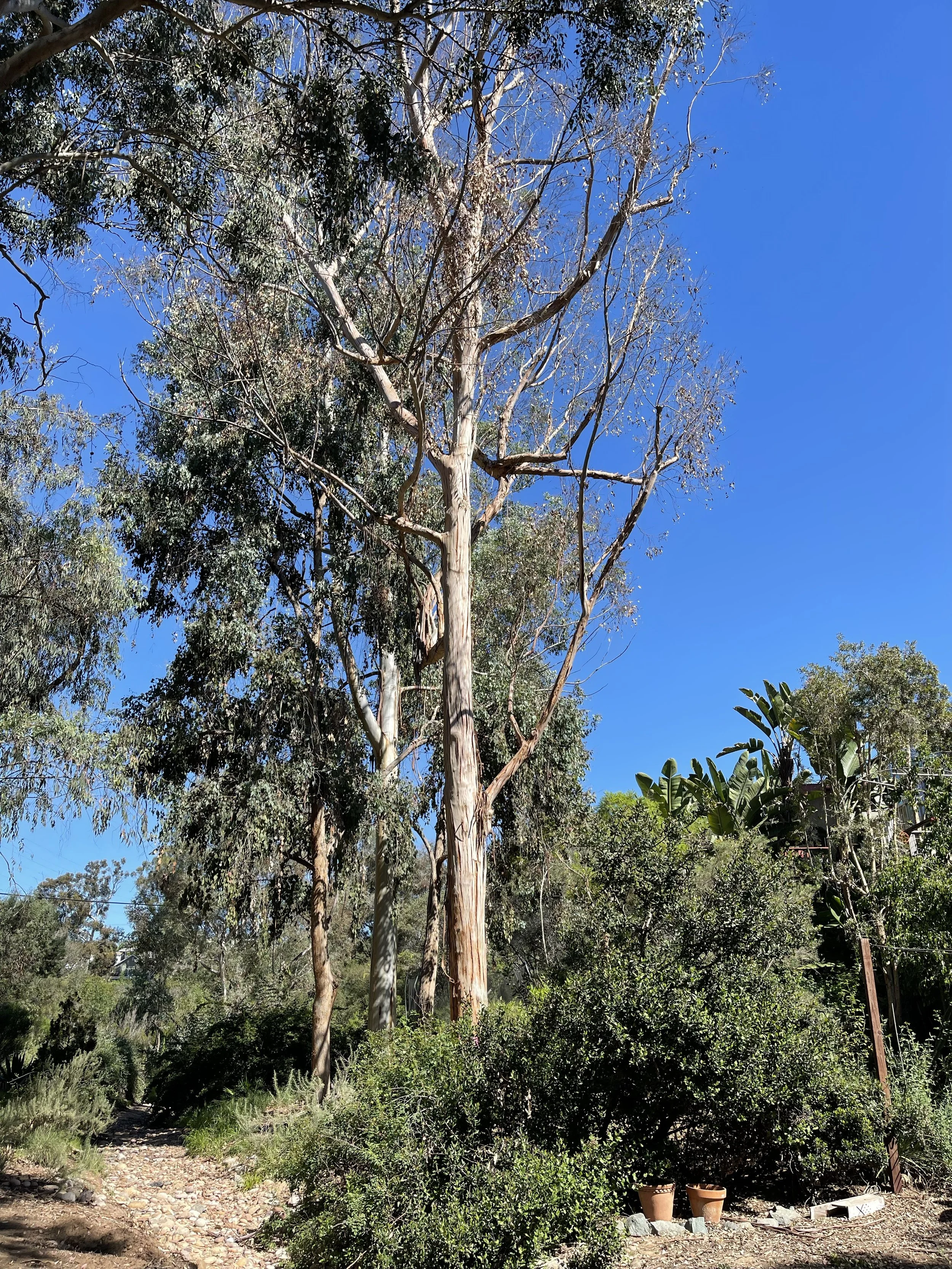
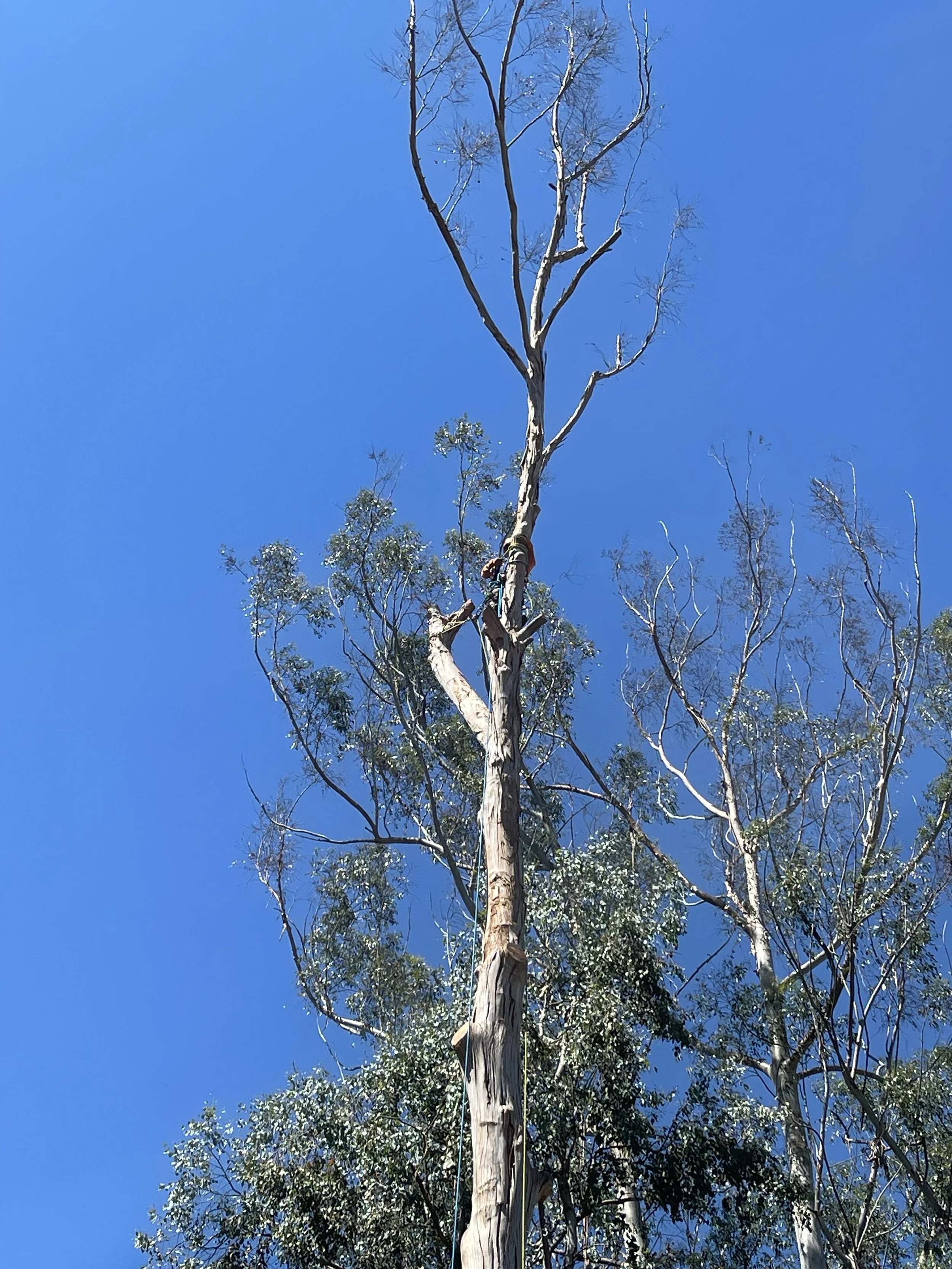
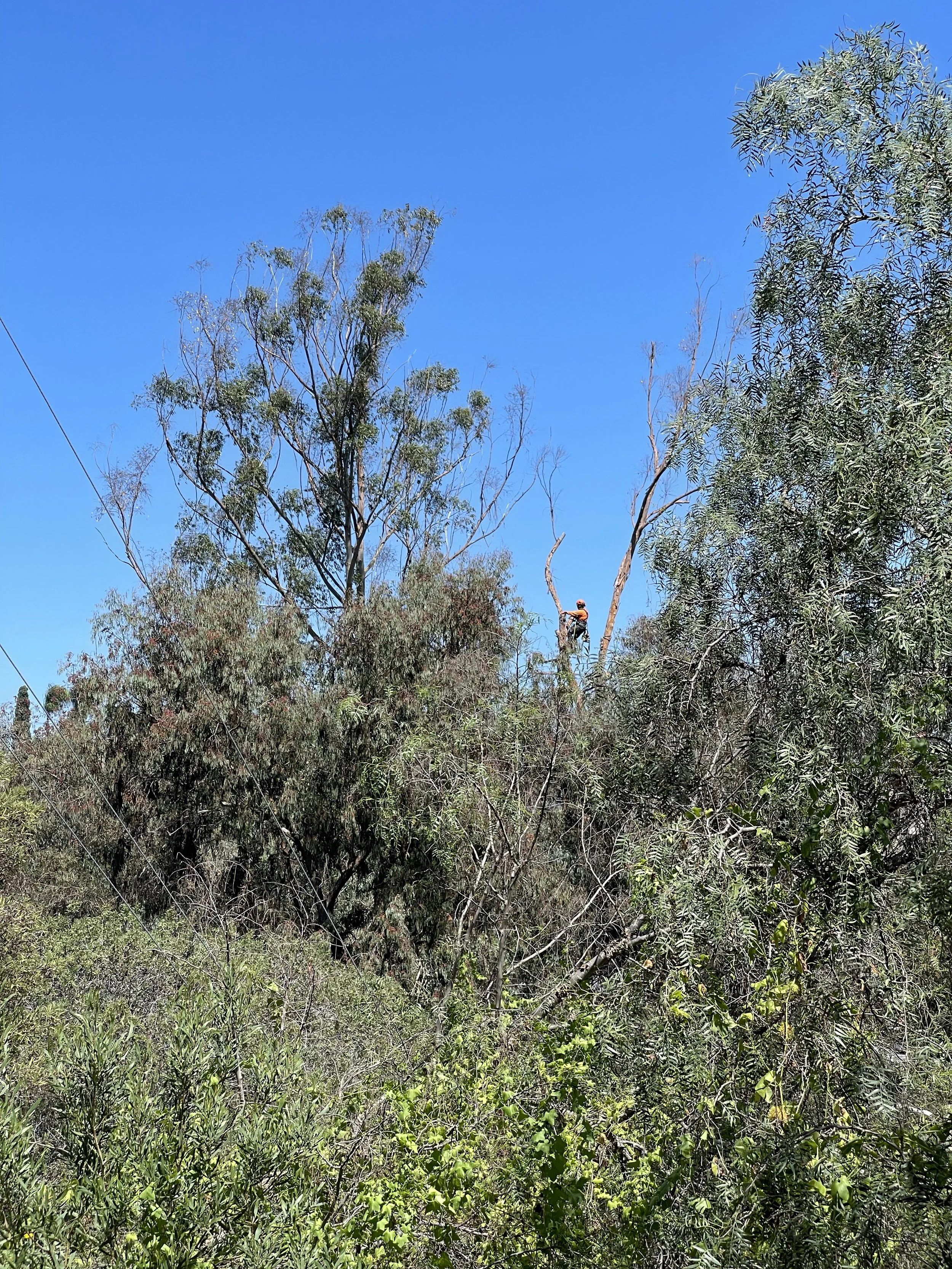
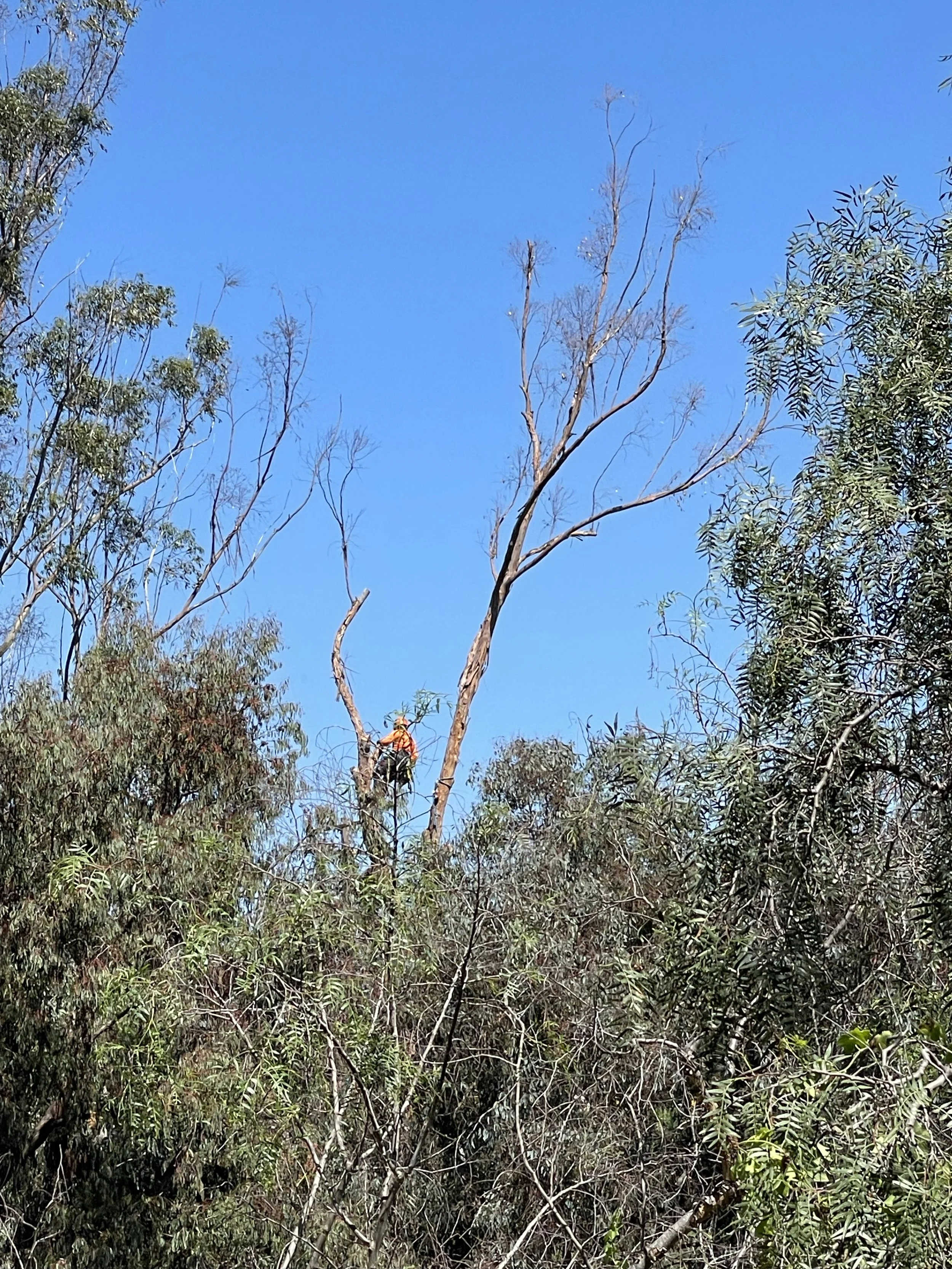
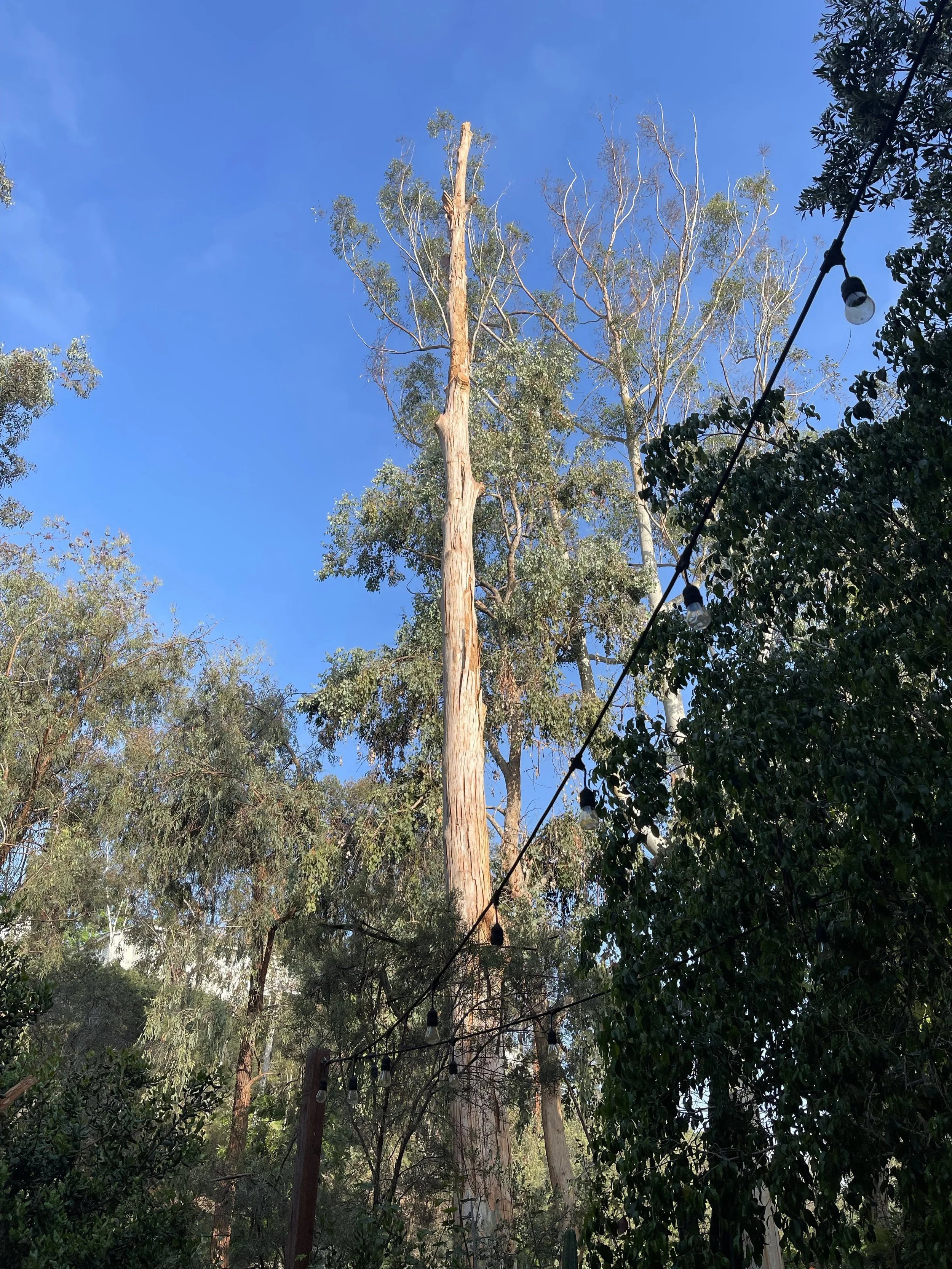
There was a eucalyptus tree that stood over a hundred feet tall in the 32nd Street Canyon. It's gone now. It came down two weeks ago, and I'm still processing what that means — not just the tree, but everything that happened around it.
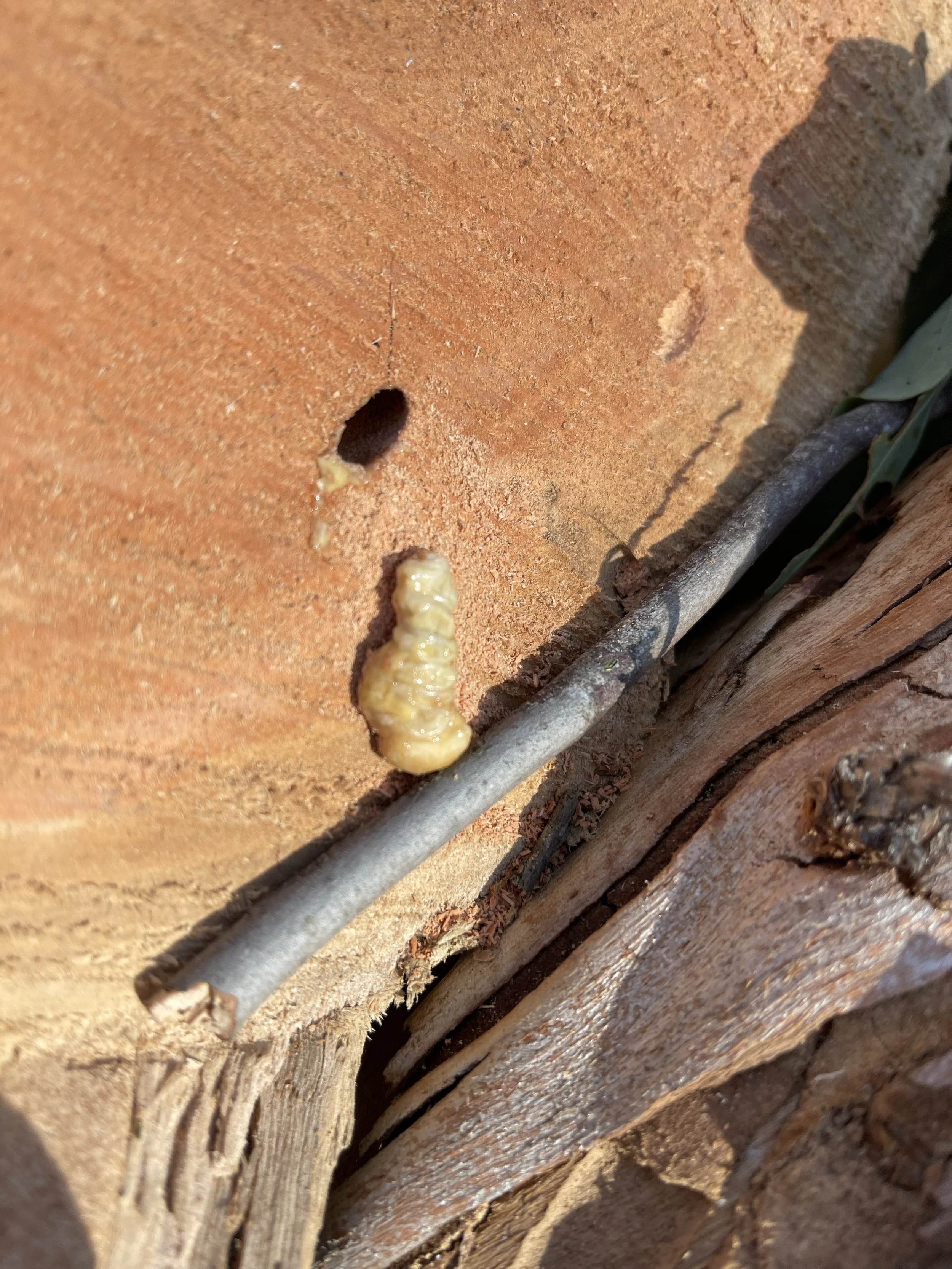
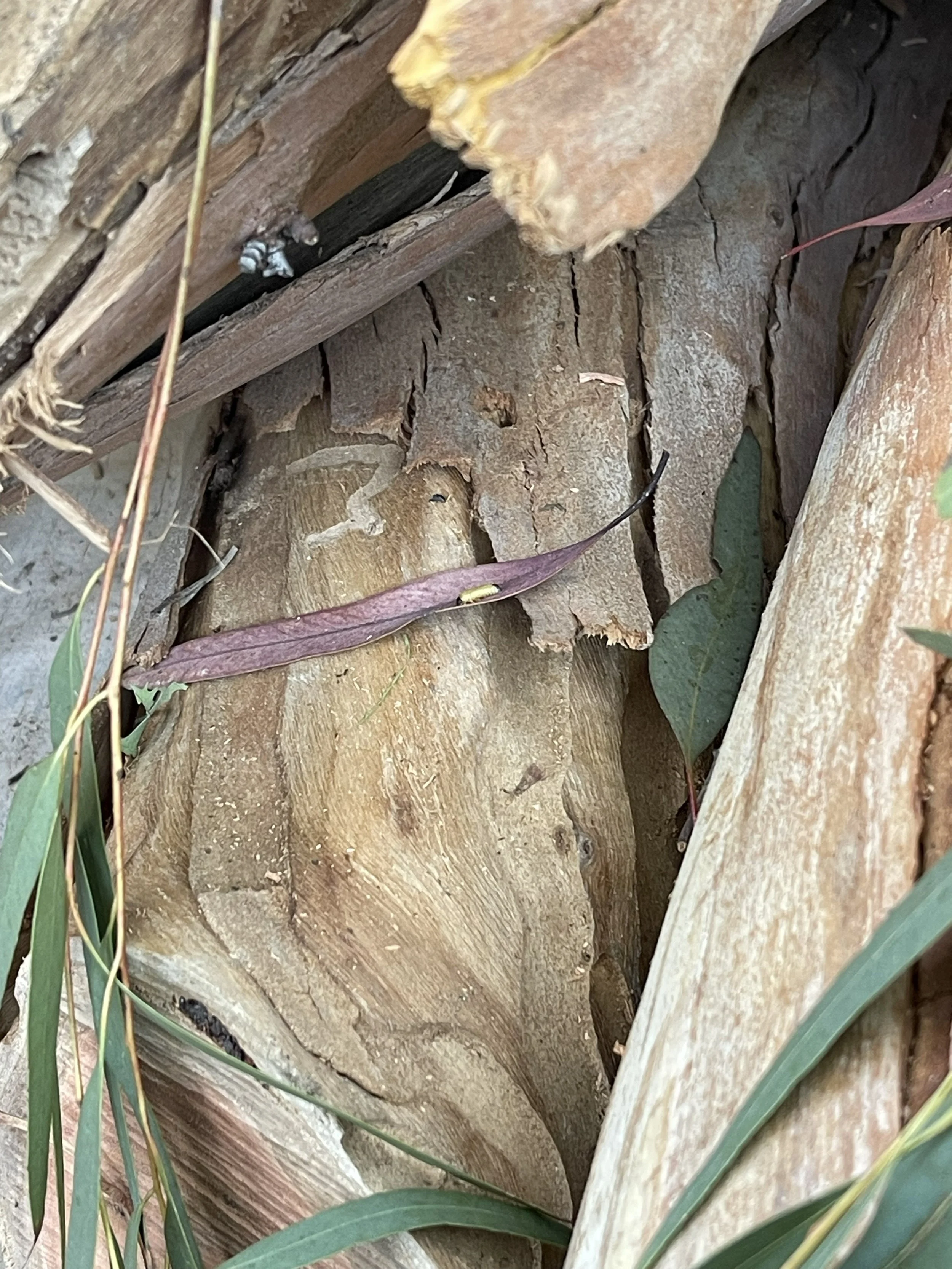
It died from an invasive beetle. And getting the city to act took months.
The tree sat on city property, just outside my neighbor's back door but leaning toward my house. A private tree service quoted $15,000 for removal, not something a homeowner absorbs. So we did what you do: we reported it and called the city. And then we called again. And again. Every rainstorm, every windstorm, we watched that massive tree lean and wondered. Wondered if today was the day it came down on its own. On the trail. On a hiker. On my house.
Eventually, it worked. We got a PO number. Then a letter with the dates. Progress.
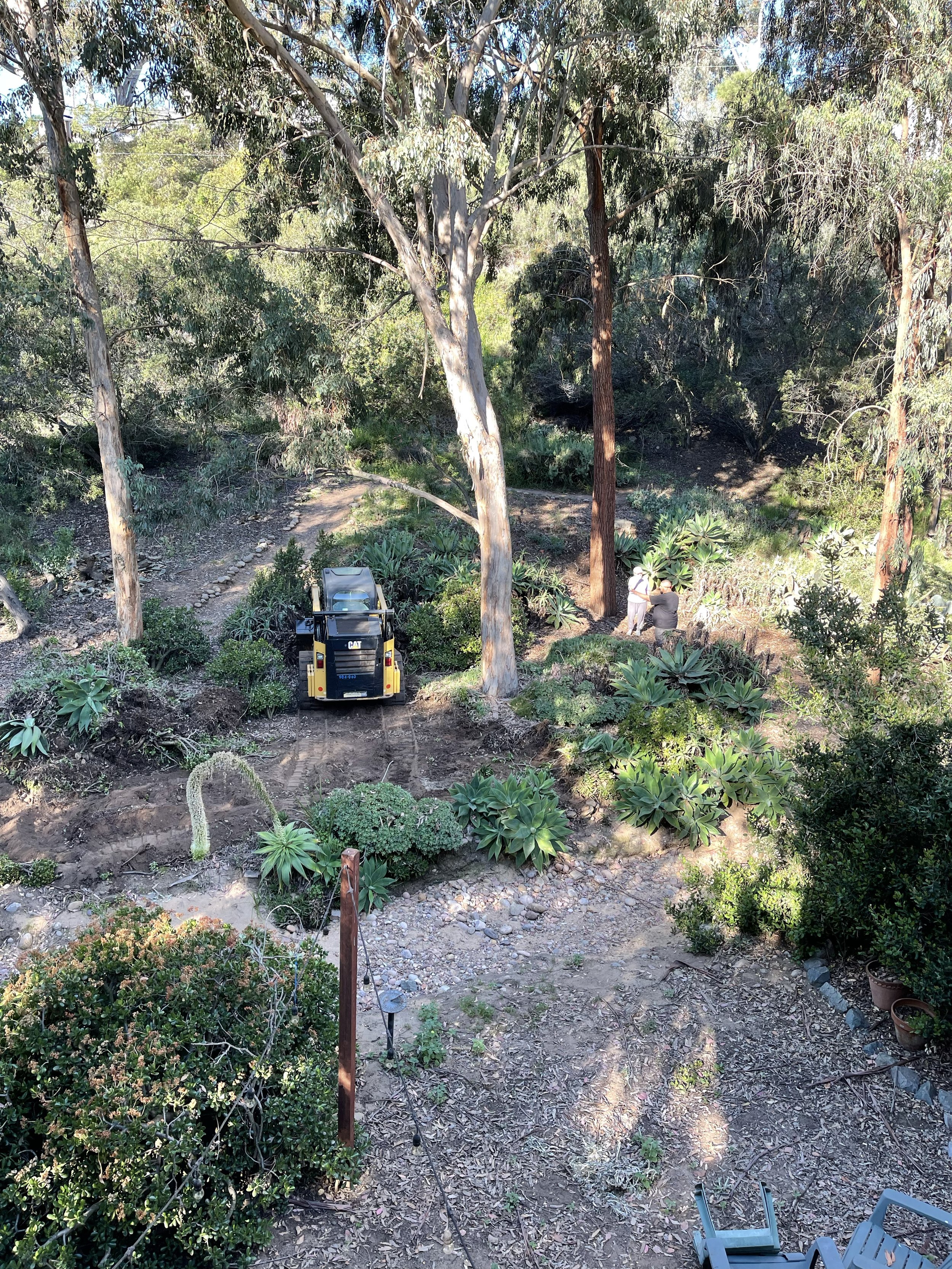
Then the day after that letter arrived, before the tree was even down, the city was in the canyon with a skid steer loader.
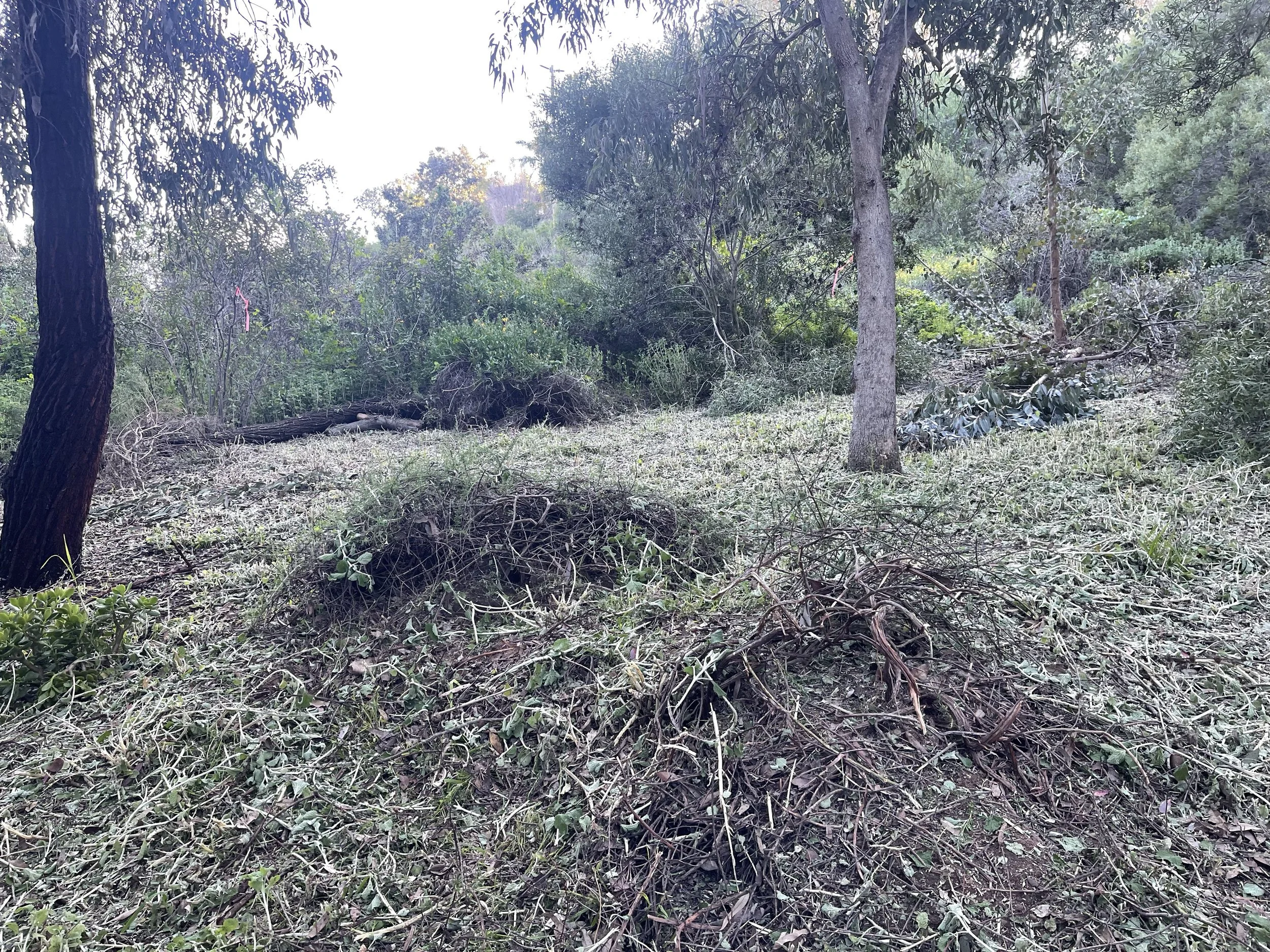
I walked down to find out what was happening. Workers explained they needed to clear the space before the tree could come down— the branches would be removed and hauled away, the trunk left in place as wildlife habitat. That part I understand. The ranger note we received confirmed the reasoning: the remaining trunks provide essential wildlife habitat, contribute to soil retention, and help with erosion control. Fine. Good, even.
And I'll give credit where it's due: the crew did a thoughtful job stacking the trunk pieces up the slope. That part was done with care.
But what they cleared to make room?
Years. They cleared years.
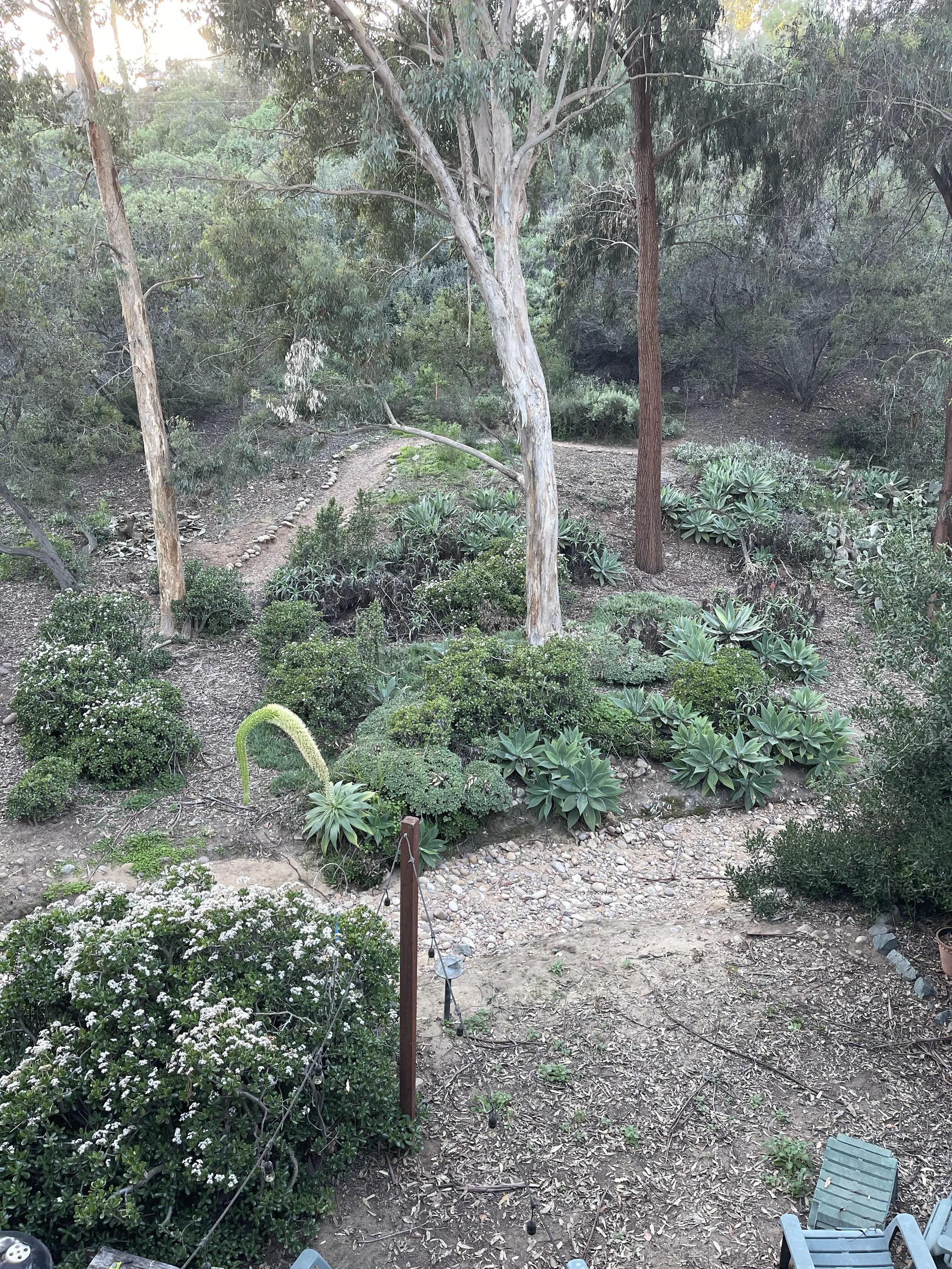
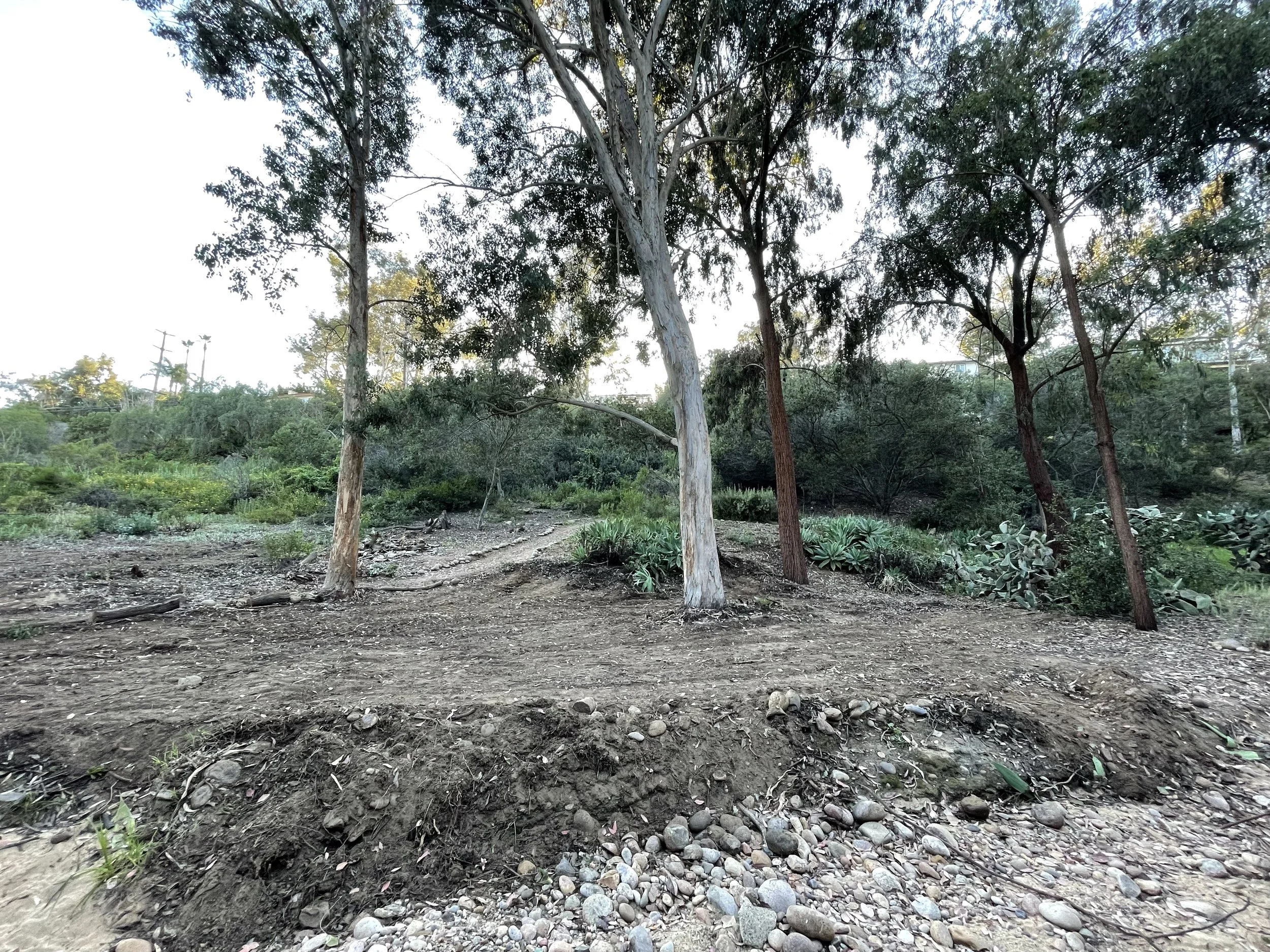
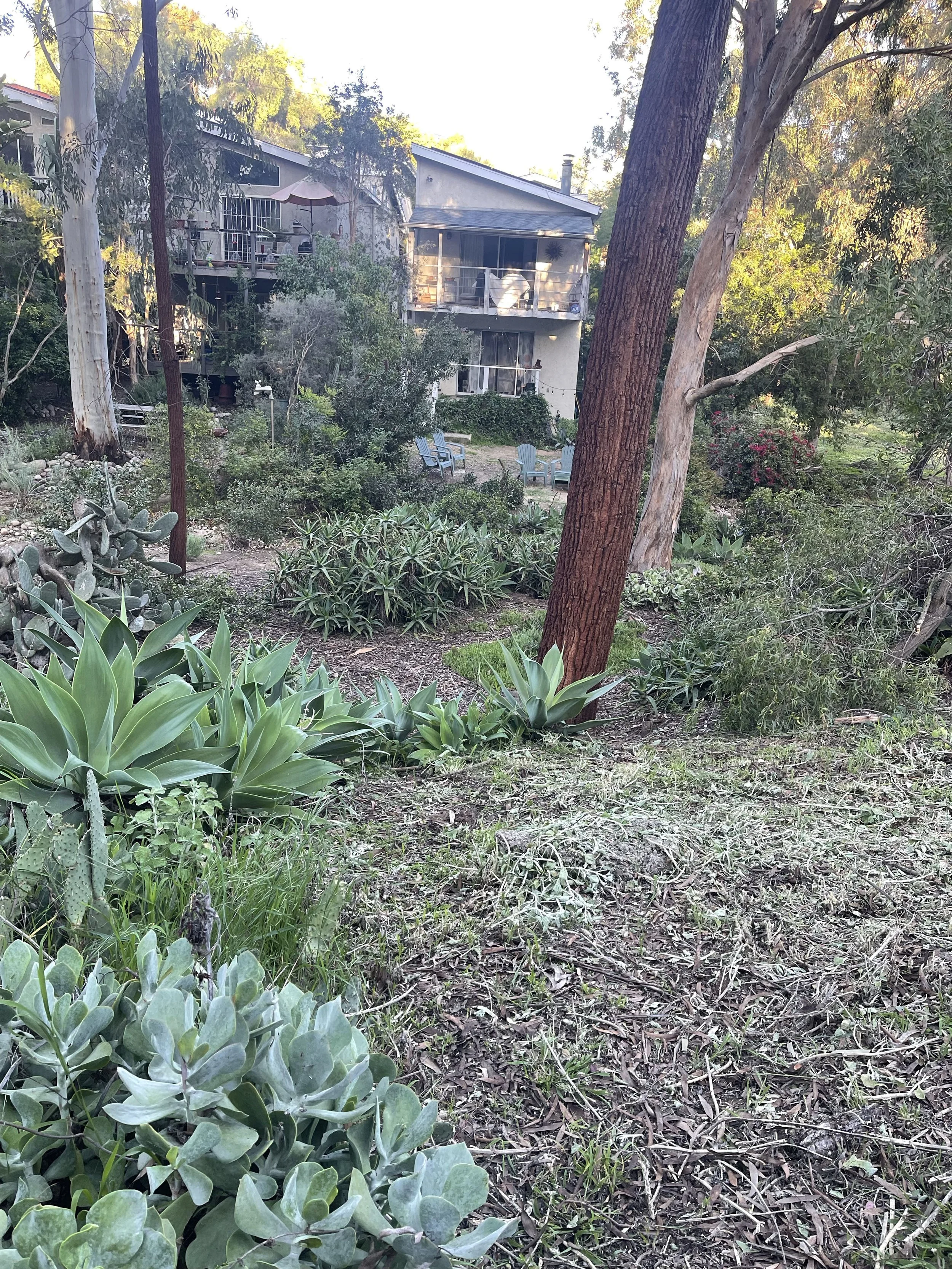
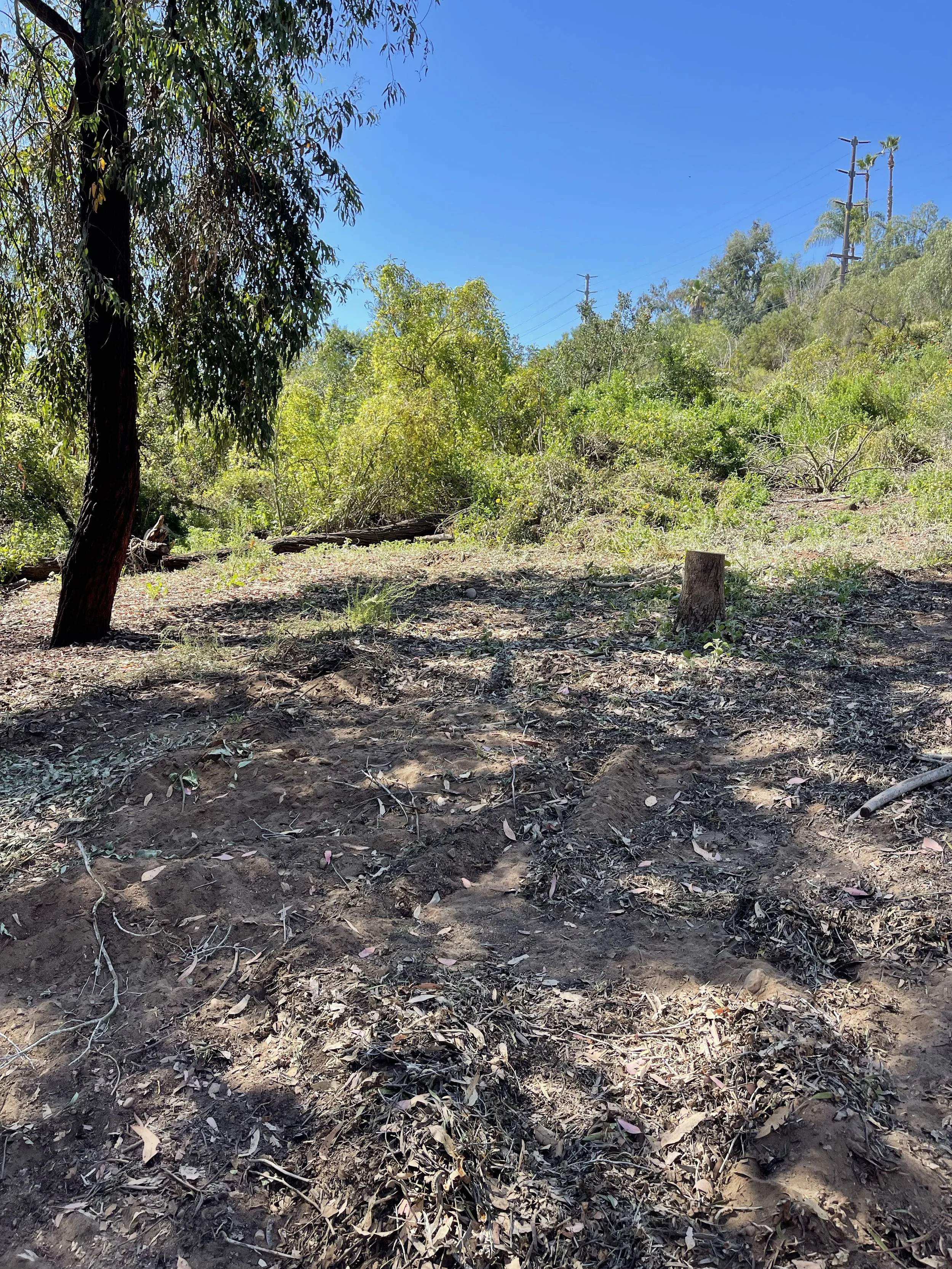
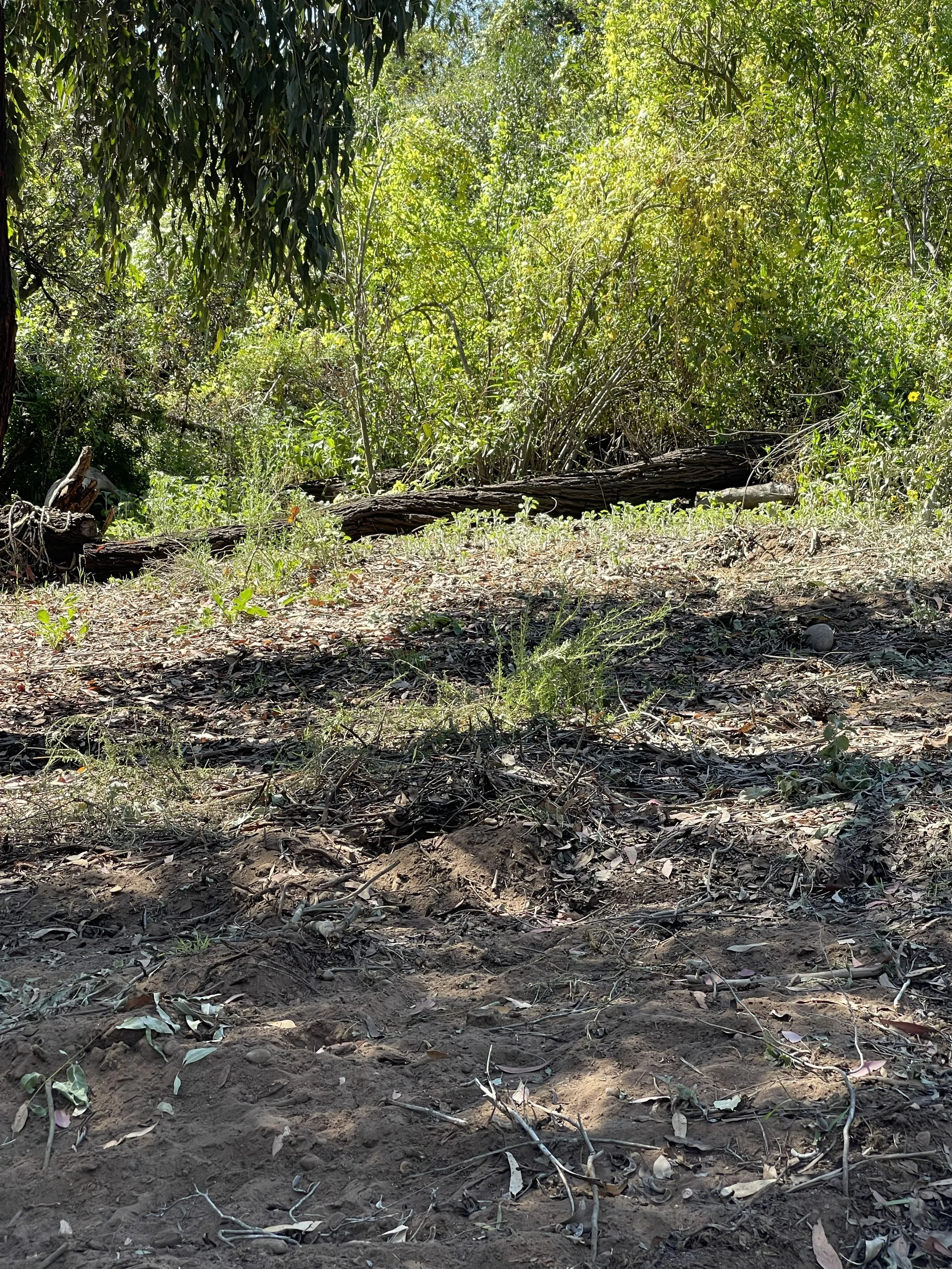
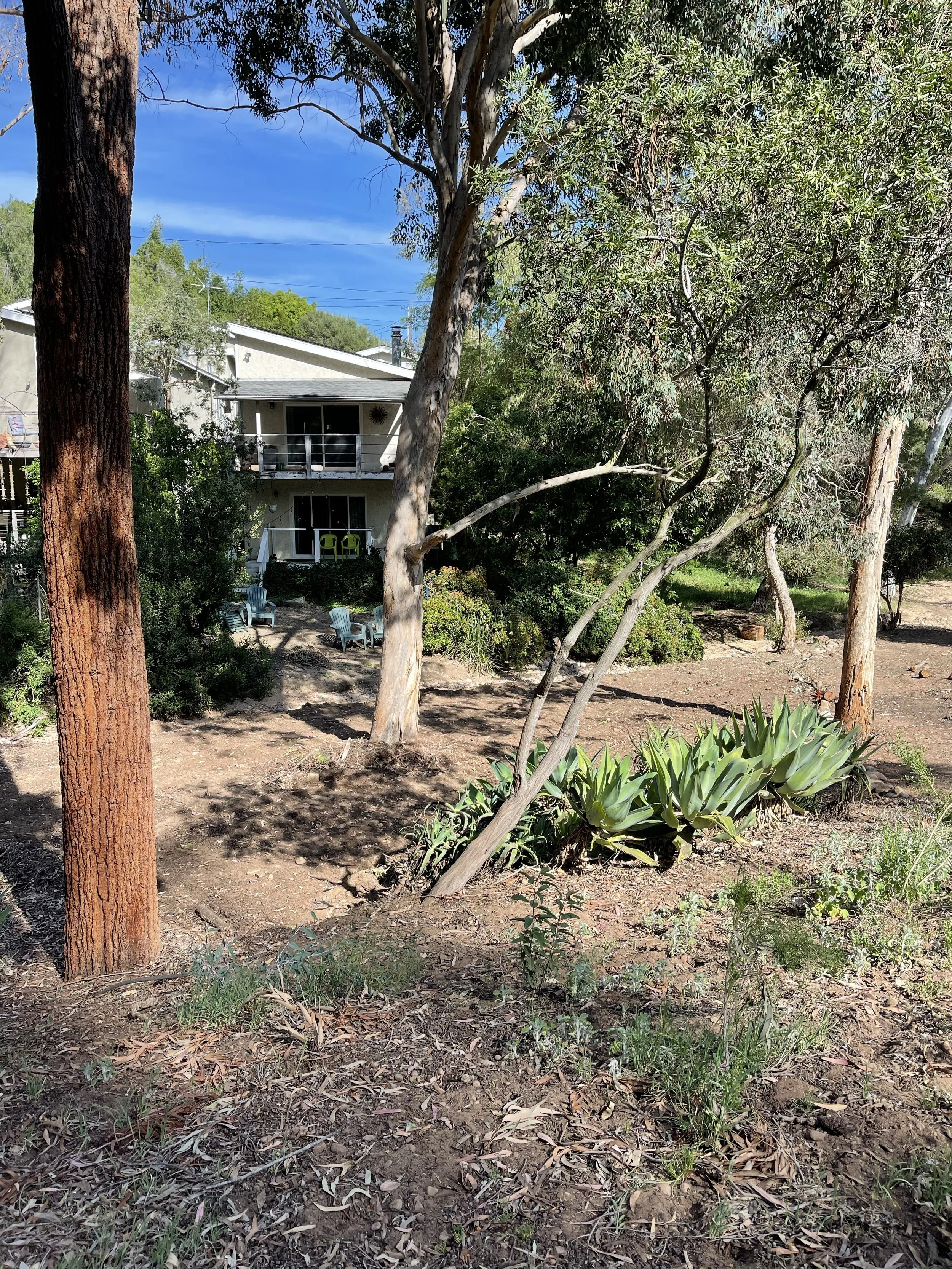
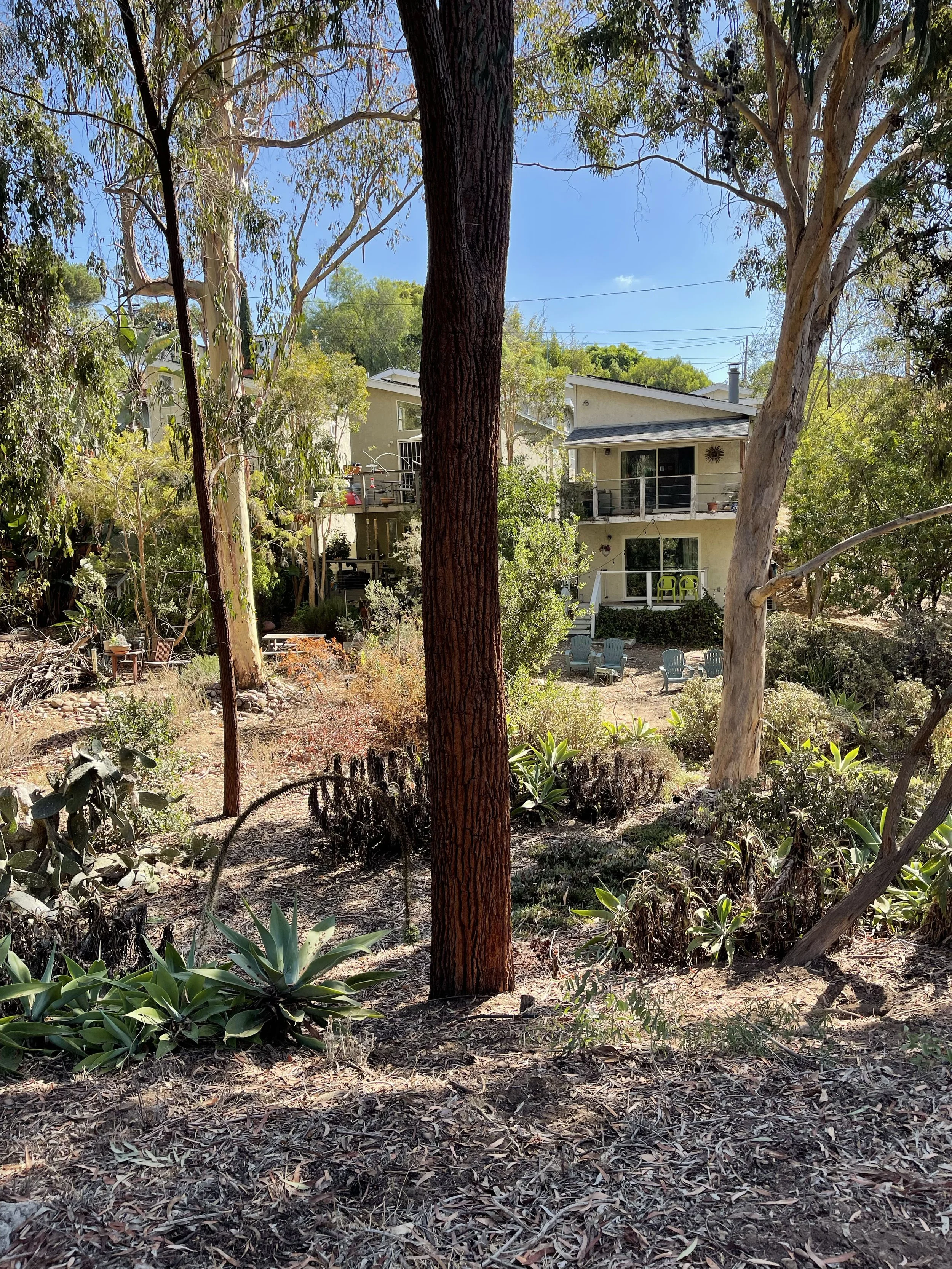
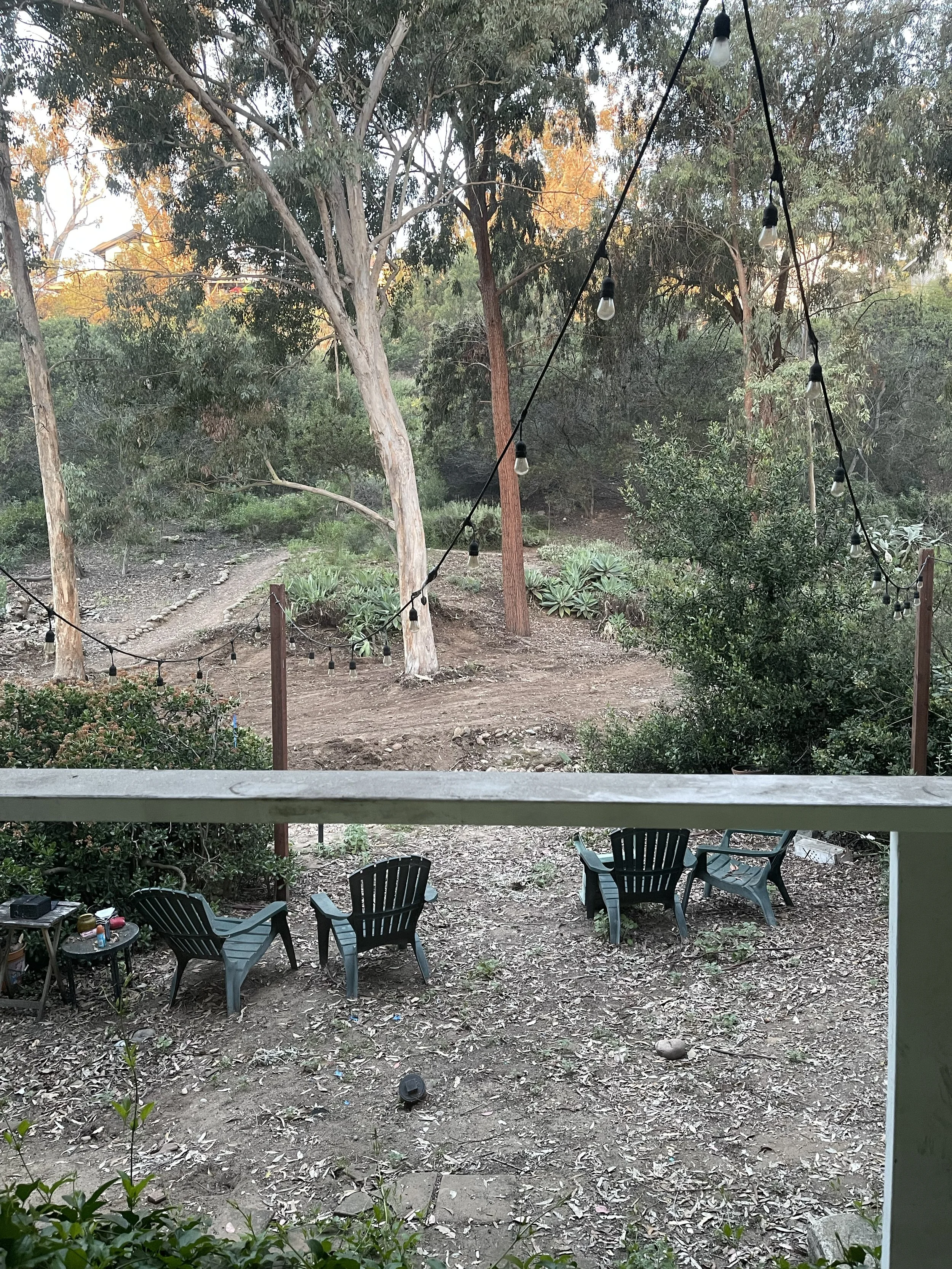
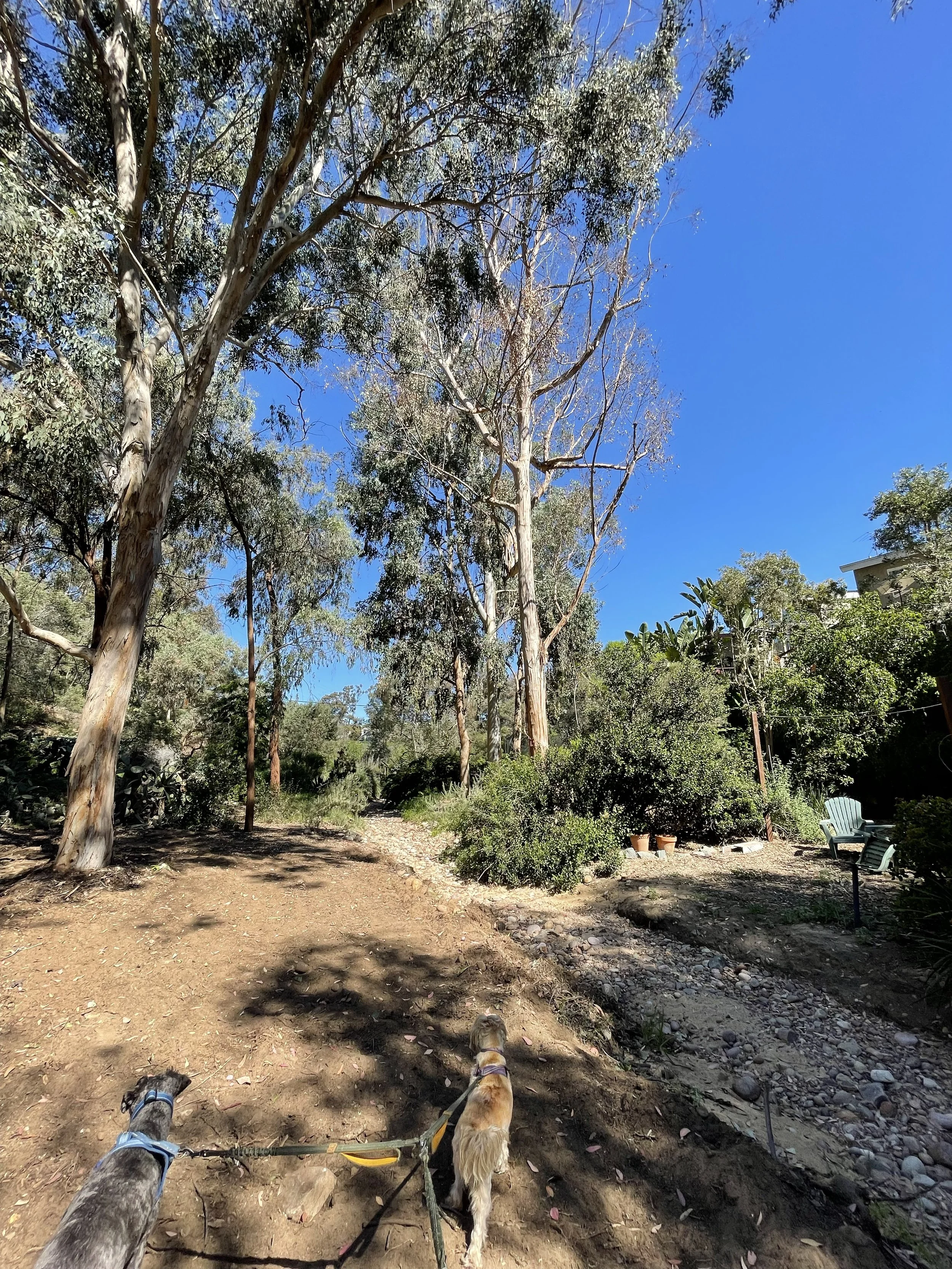
The burrows. The one remaining buckwheat. The rock trail my kids and I built stone by stone. Plants we've been nurturing for years. Gone in a few hours, scraped flat, the soil loosened and exposed. To the left of the path, a pasture-sized area was cleared — taking out a eucalyptus and two acacias in the process, invasive species so that part's a genuine win — but the debris was never even staged there. It was cleared for nothing.
And here's what's hard to shake: assurances were given about how this would go. We were told one thing. What happened was another.
A friend who loves this canyon as much as I do wrote to me after seeing it: "To cut down one tree, City crews came in with a wide vehicle breaking branches and plants on the access trail... and then killed and dislodged earth from the whole plain." She left in tears.
I keep coming back to one thought: it's almost as invasive as the beetle that started all of this.
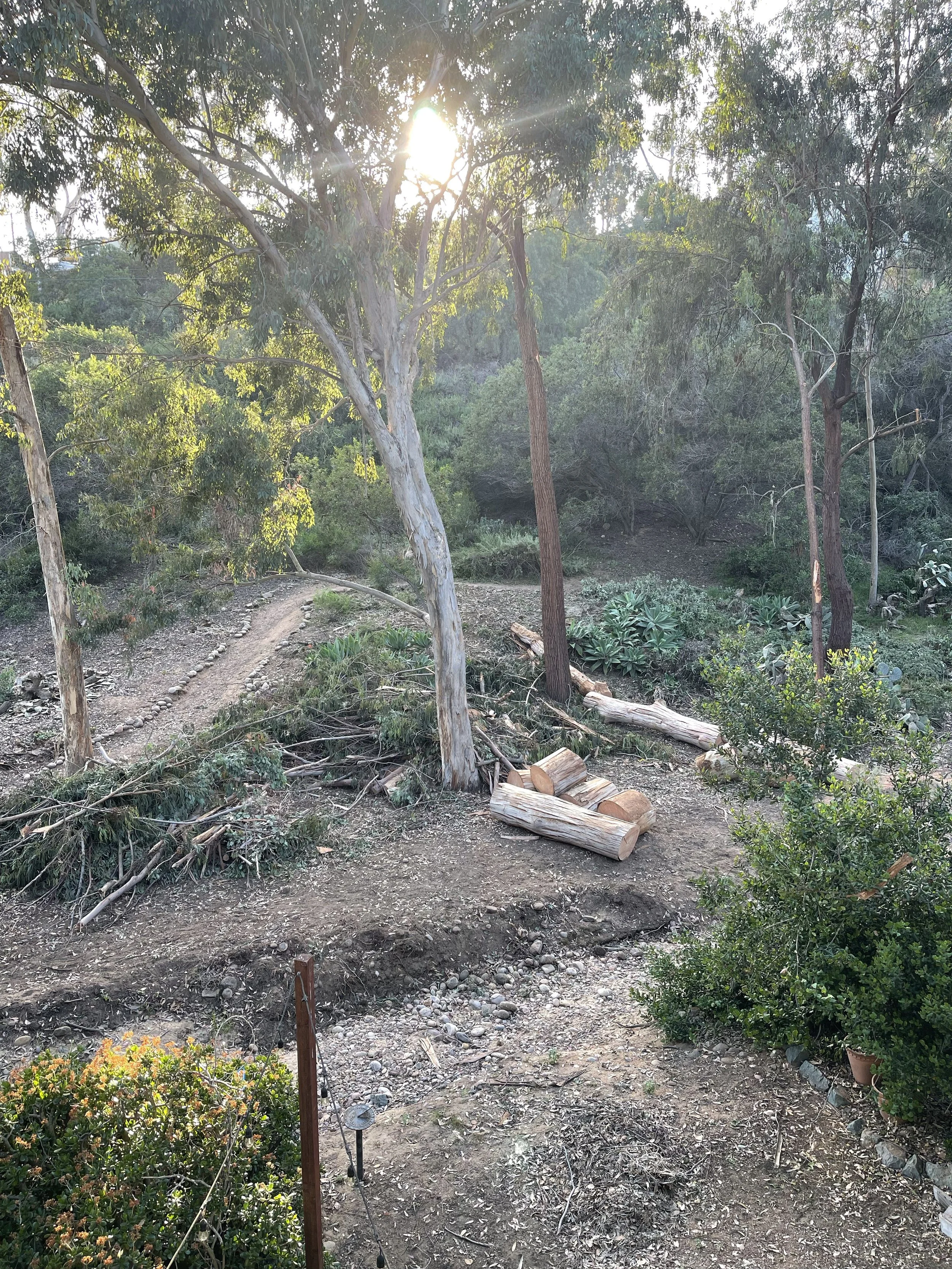
Why not just cut the tree down and let it fall?
I'm not an arborist. Maybe there are answers I don't have. But from where I stood—watching that much cleared, that much undone—it felt like the cure did more damage than the disease.
The heavy equipment left a lot of disturbed soil along the path — loose and exposed. If it rains, that soil can move directly into the creek bed, which matters in dedicated open space. The crew is scheduled to return in a few weeks to collect the remaining branches. We're hoping that process treads a little lighter.
Some of the log sections have disappeared from the canyon. It's a great instinct — beautiful wood. But these trees were killed by wood-boring beetles, and moving infested wood can spread them to healthy trees nearby. Worth knowing.
The trunk remains. The canyon will recover. It always does, with help.
But this one hurt. Fourteen years of care, cleared in an afternoon. We'll rebuild what we can. We always do.